Rabbits, guinea pigs and rats, seen by vets who see them often
Rabbits are prey animals and they hide illness until they are very unwell, which makes twelve hours matter. Two of our hospitals hold the exotics caseload, and both have vets who see rabbits every week rather than every few months.
Seen at Joondalup and Midland, where the vets who hold this caseload consult.
Book an appointment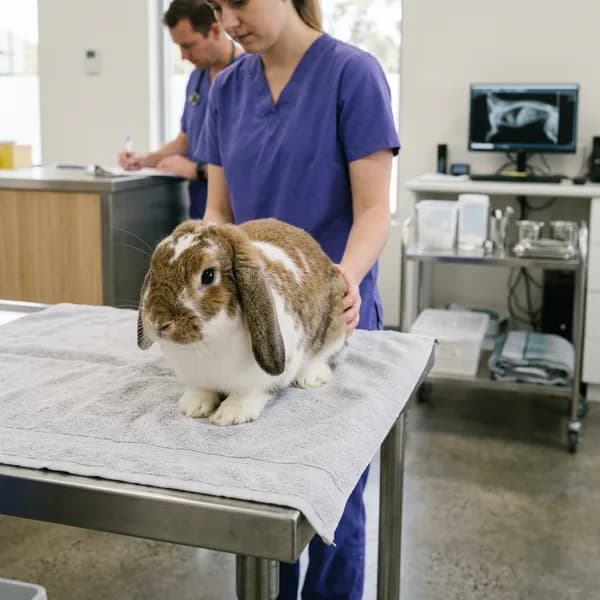
What changes, and when
- 8 weeks to 6 months
Young
First calicivirus vaccination, a dental check, desexing from four to six months, and the diet set correctly before habits form.
- 6 months to 4 years
Adult
Vaccination every six to twelve months, a dental examination twice a year, and a weight recorded at each visit.
- 4 years and older
Older
Twice-yearly checks with attention to teeth, gut motility and hind-limb mobility, and blood screening where anything has changed.
Services for rabbits and small mammals
Health checks
Dogs and cats mask pain and illness well into the middle of it.
Vaccinations
Which vaccines a pet needs depends on where it lives, how old it is and what it does with its day.
Desexing
Timing matters more than it used to.
Dental care
By three years old most dogs and cats have something worth grading.
Diagnostic imaging
Imaging is where a guess becomes a diagnosis.
What we see most
Gut stasis
A rabbit that stops eating or stops passing droppings is an emergency the same day. The gut slows, then stops, and the animal declines fast.
Dental spurs
Rabbit teeth grow continuously and grind against each other. Unlimited hay is what wears them, and a rabbit on a pellet diet grows spurs that cut the tongue.
Flystrike
A Perth summer risk for any rabbit with a soiled back end. Check under the tail twice daily from November to March.
Calicivirus
Present in Western Australia and fatal in unvaccinated rabbits, including rabbits kept entirely indoors. The vaccination is the whole defence.
Respiratory disease in rats
Very common and very manageable when it is treated early. A rat making a clicking sound while breathing needs a consult that week.
Book for your rabbits and small mammal
Appointments at Joondalup and Midland.