Desexing, and when it is the right age for your dog
Timing matters more than it used to. The evidence on large breeds now favours waiting for skeletal maturity, so the age we recommend for a labrador is different from the one we recommend for a jack russell.
2post-operative checks included
What happens
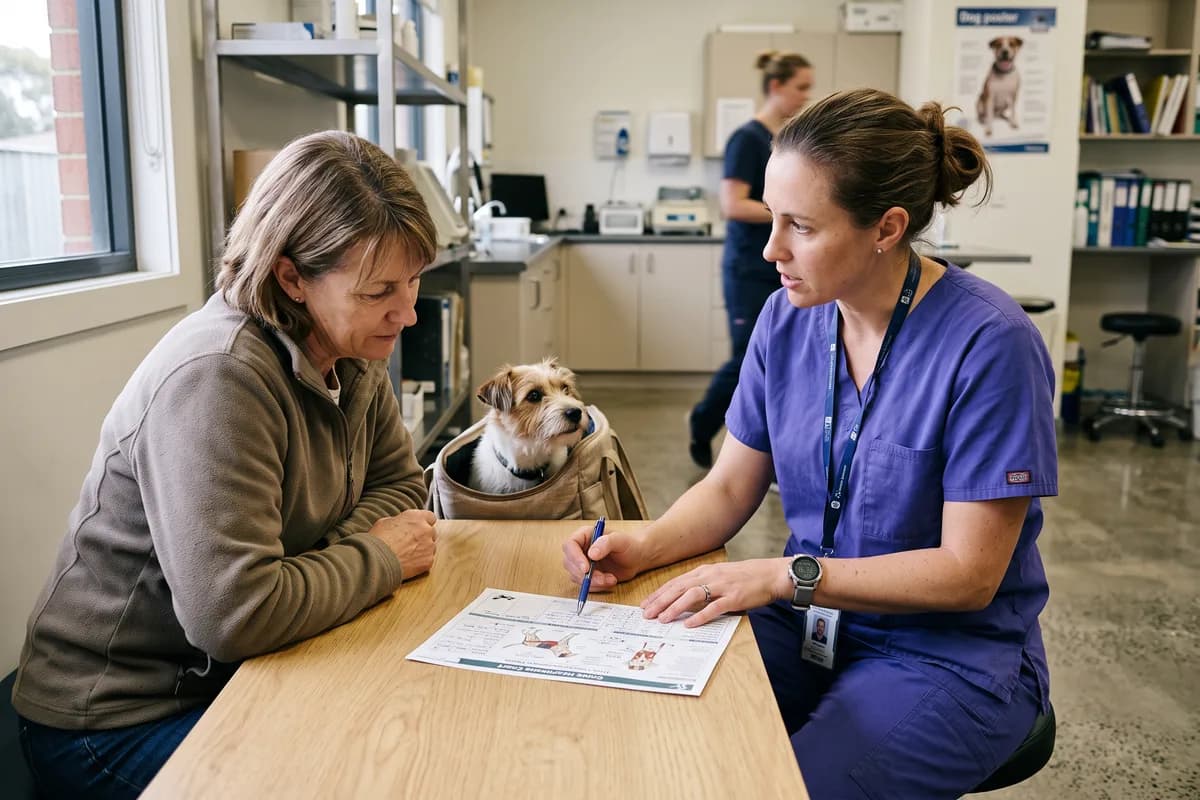
The consult before the day
We weigh, examine and talk through the age question for your specific dog. Nothing is booked in that appointment, so you can go home and think about it.
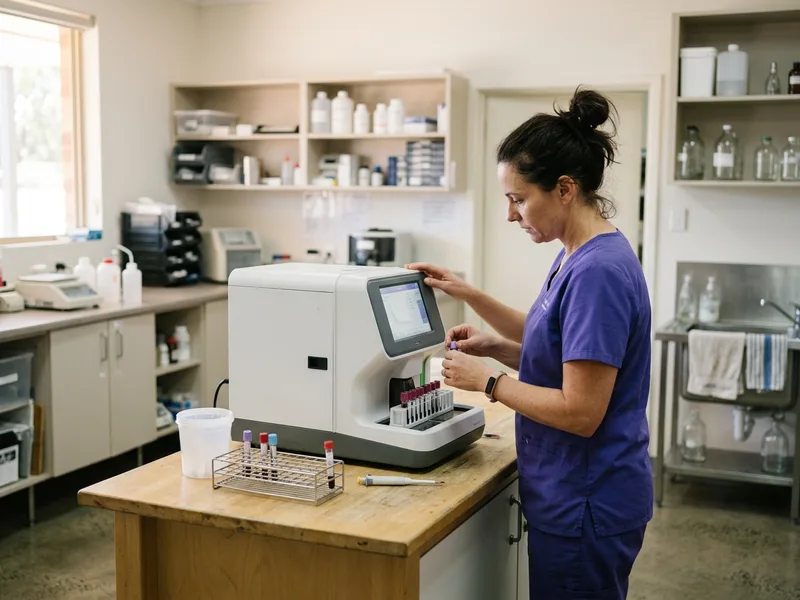
Pre-anaesthetic bloods
Run in our own lab the morning of the surgery. Kidney and liver values change what the anaesthetist uses, and the result is back before the pet is induced.
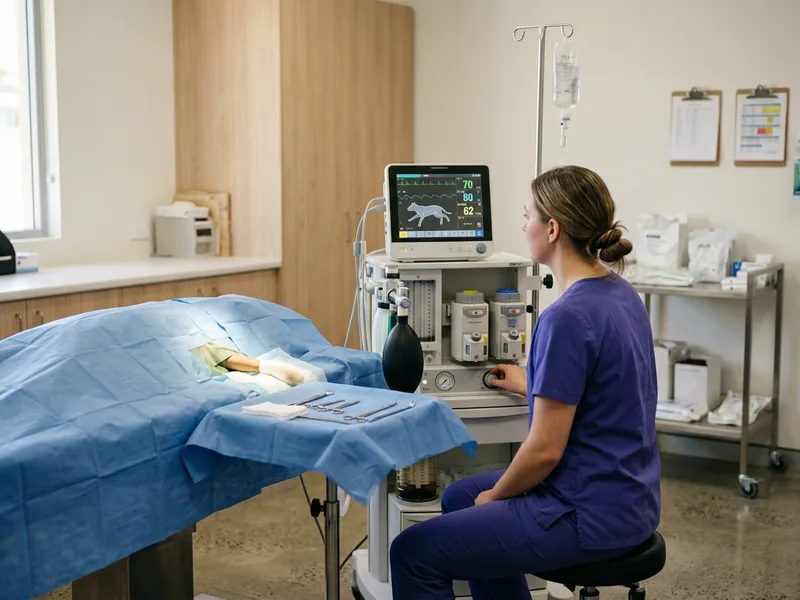
The surgery
Full anaesthesia with a dedicated nurse monitoring, a warmed table, and pain relief on board before the first incision rather than after it.
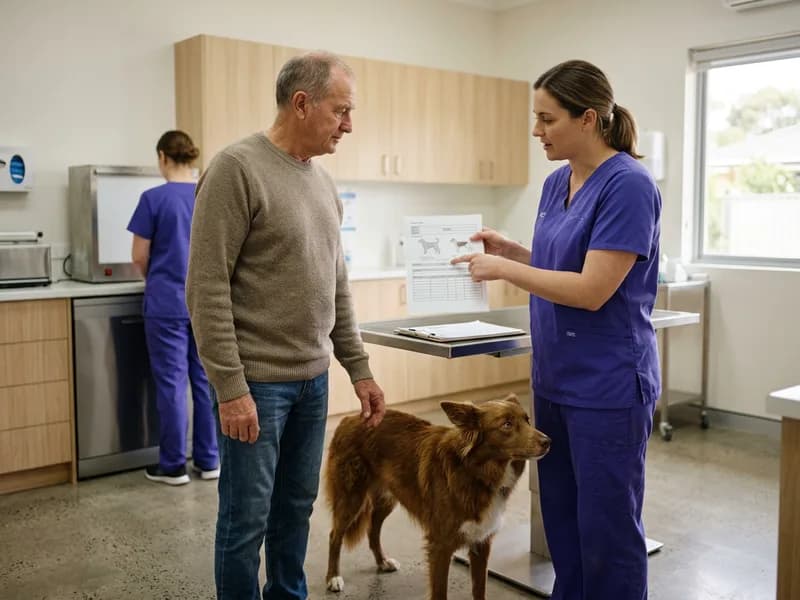
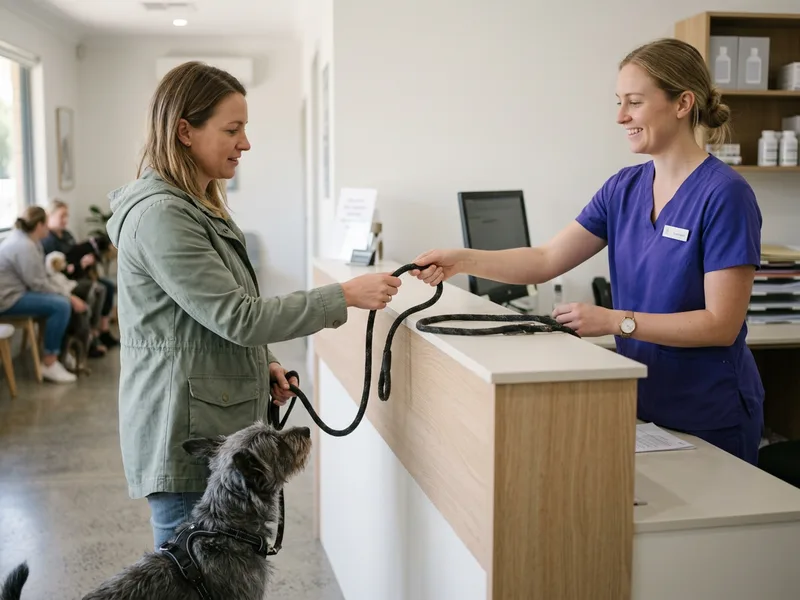
Going home the same day
Most pets go home between 4pm and 6pm with two days of pain relief and a printed set of instructions for the wound.
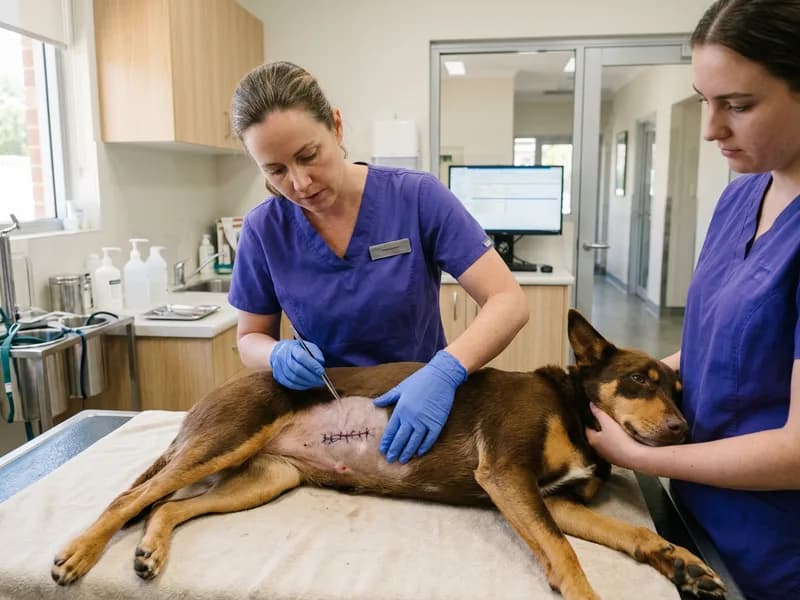
The check at three days and ten
Both are included. The three-day check catches wound licking and swelling early, and the ten-day check is when the cone usually comes off.
Only on this page
Recommended age by adult body size
These figures are where our vets start. Behaviour, household and health can move any of them, which is what the consult beforehand is for.
| Adult weight | Example breeds | Female | Male |
|---|---|---|---|
| Under 10 kg | Jack russell, miniature poodle, most cats | 5 to 6 months | 5 to 6 months |
| 10 to 20 kg | Cavoodle, beagle, staffy | 6 to 9 months | 6 to 9 months |
| 20 to 30 kg | Kelpie, border collie, boxer | 9 to 12 months | 12 months |
| 30 to 45 kg | Labrador, german shepherd | 12 to 18 months | 18 months |
| Over 45 kg | Great dane, mastiff, rottweiler | 18 to 24 months | 18 to 24 months |
Cats are the simple case. Five months, male and female, and the evidence has stayed steady on that for years.
Where you can get this
6 of our six hospitals, because the equipment and the people it needs live in those buildings.
What it costs
From $395cat spey
Dog prices run by weight. Every quote includes bloods, pain relief and both rechecks.
All consult feesQuestions we get asked
Will desexing calm my dog down?
It reduces roaming and some hormone-driven behaviour in males. Excitability, pulling and barking are training questions, and desexing moves them very little.
Will my pet gain weight?
Energy requirement drops by roughly a quarter afterwards. Feeding the same amount is what causes the gain, so we send you home with the new figure for your pet.
Is a keyhole spey available?
Laparoscopic speys run at Fremantle and Joondalup for dogs over 15 kg. They cost more and the recovery is shorter.
Can my dog be desexed while in season?
We wait three months. The tissue is heavily vascular during a season and the surgical risk is meaningfully higher.
How long is the recovery?
Quiet on a lead for ten days, with no off-lead running, swimming or baths. Most owners find days four to seven hardest, because the pet feels well before the wound has healed.
Book desexing
Available at Fremantle, Subiaco, Joondalup, Midland, Canning Vale, Rockingham.