Budgies, cockatiels, bearded dragons and pythons
Birds and reptiles need a vet who examines them regularly, and the two hospitals that hold this caseload are Joondalup and Midland. A bird sitting fluffed at the bottom of the cage has usually been unwell for a while.
Seen at Joondalup and Midland, where the vets who hold this caseload consult.
Book an appointment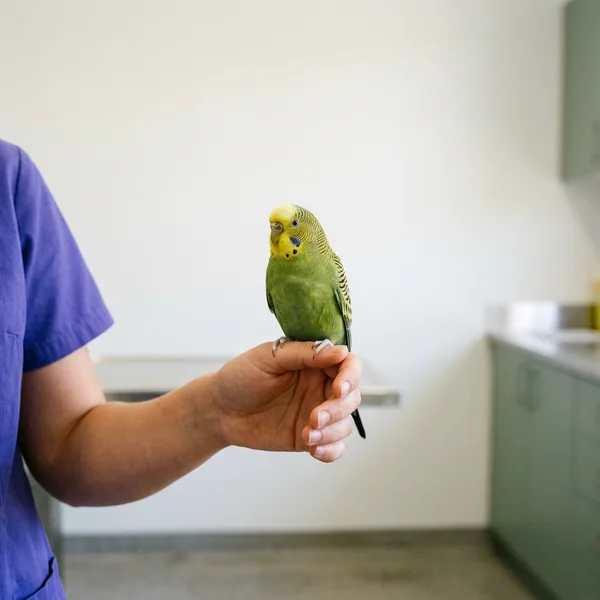
What changes, and when
- First fortnight
New arrival
A health check, a droppings examination and a weight in grams. Weight is the single most useful number in bird medicine, and the first one is the baseline.
- Ongoing
Established
A yearly examination with a weight, a beak and nail check, and a review of the diet, which is where most avian illness starts.
- Twice yearly
Reptile husbandry review
Temperature gradient, ultraviolet output and humidity, measured rather than estimated. Most reptile illness we see is a husbandry problem wearing a medical name.
Services for birds and reptiles
Health checks
Dogs and cats mask pain and illness well into the middle of it.
Diagnostic imaging
Imaging is where a guess becomes a diagnosis.
In-house pathology
Four hospitals run their own analysers, so a sick animal gets its biochemistry, haematology and electrolytes inside twenty minutes.
Nutrition and weight
Carrying an extra fifteen per cent shortens a dog's life and brings arthritis forward by years.
What we see most
A seed-only diet
The commonest cause of illness in pet birds. Seed is low in calcium and vitamin A, and the conversion to pellets and vegetables takes weeks of patience.
Feather plucking
Medical causes are excluded first, then environment and behaviour. It is slow work and the birds that improve are the ones whose owners start early.
Egg binding
A hen straining, fluffed and on the cage floor is an emergency the same day. It is more common in cockatiels and in birds on a poor diet.
Metabolic bone disease in reptiles
Caused by too little ultraviolet light or calcium. It is visible on a radiograph, largely preventable, and only partly reversible.
Retained shed and mouth rot
Both point back to humidity and temperature. We measure the enclosure rather than asking what the dial says.
Book for your birds and reptile
Appointments at Joondalup and Midland.