Dental disease is the most common thing we find, and the most treatable
By three years old most dogs and cats have something worth grading. The grade decides everything that follows: grade two is a clean, grade four is usually an extraction, and about eighteen months of waiting is what separates them.
4grades, and two of them need surgery
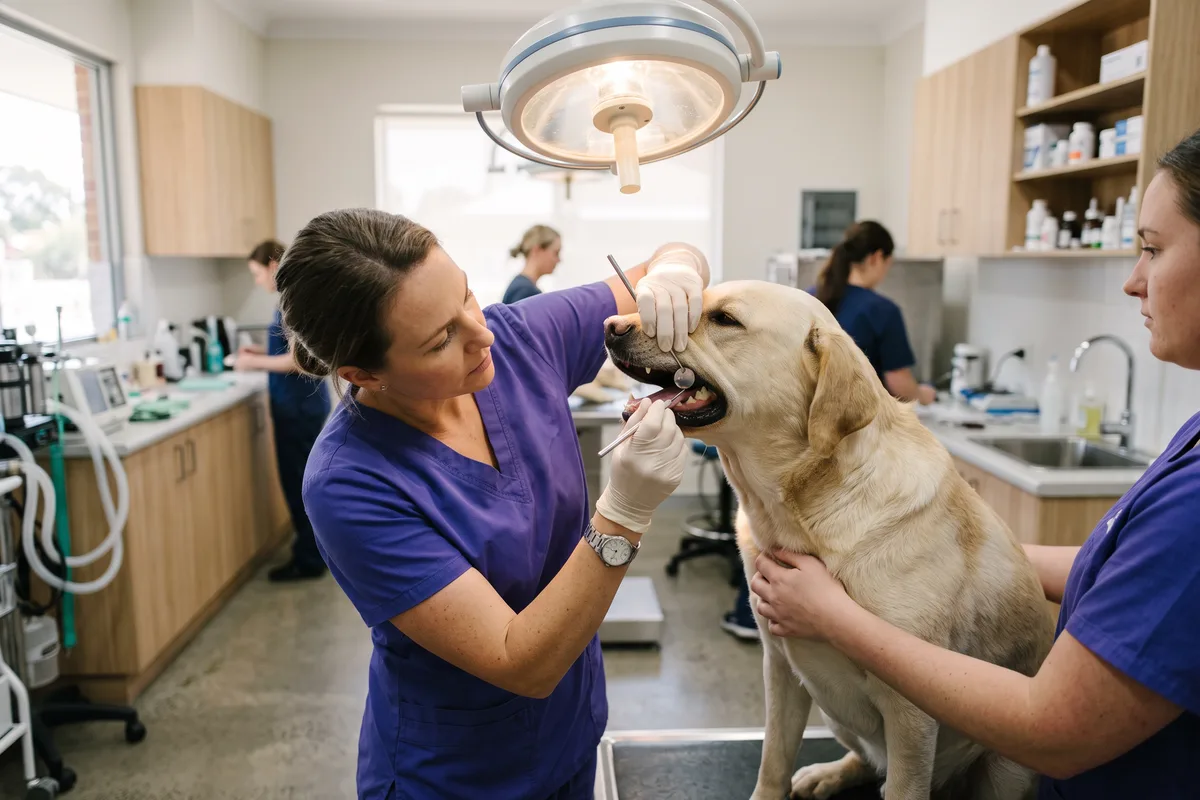
What happens
The grade, awake
Every consult includes a grade. It takes a minute and gives you the number that decides whether this is a watching brief or a booking.
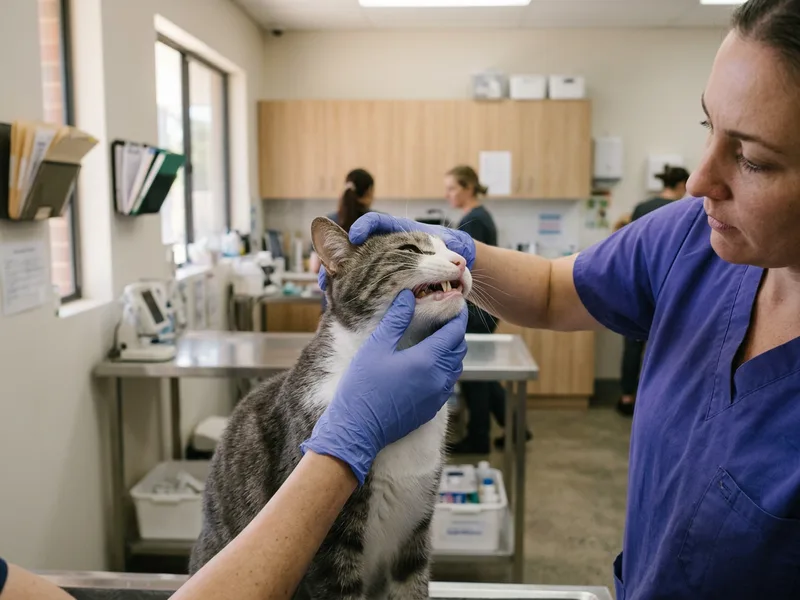
Full mouth radiographs
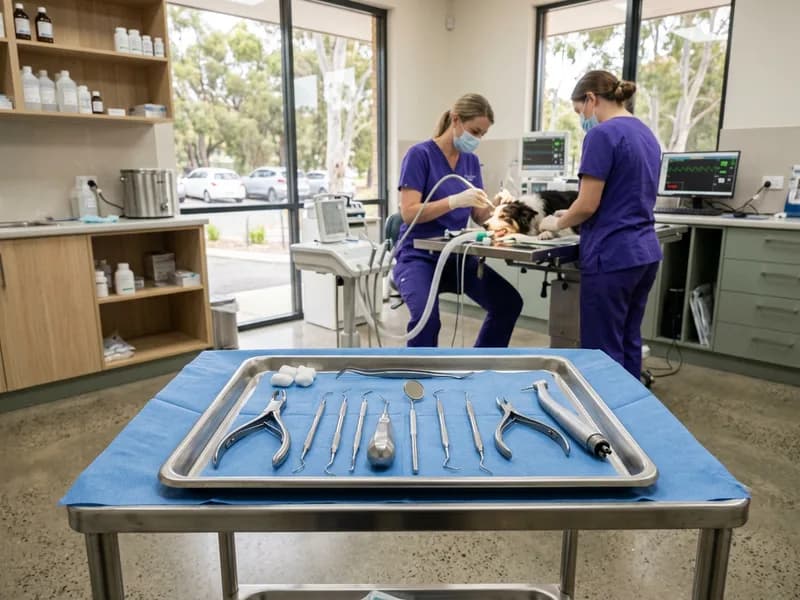
Two thirds of a tooth sits below the gum. The dental suite at Canning Vale has its own radiography unit, and the films are what keep a healthy-looking tooth over an abscessed root from being left in place.
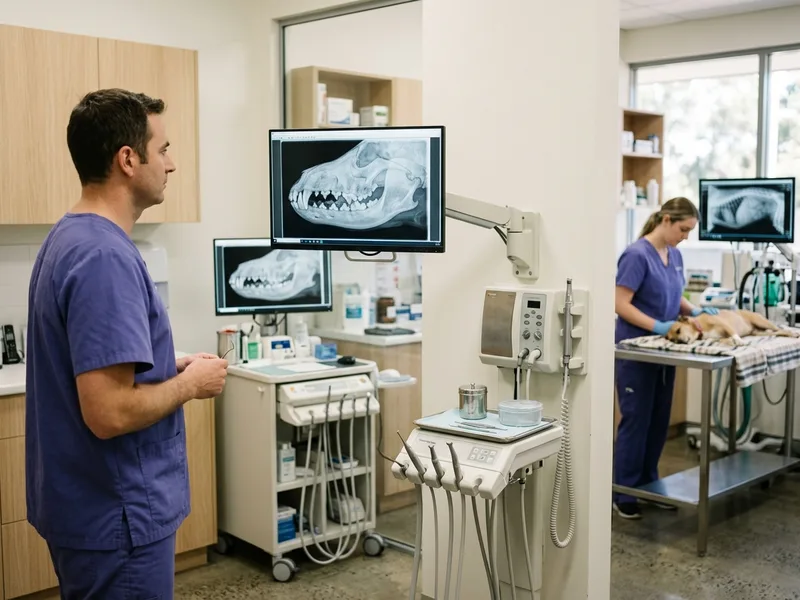
Scale and polish
Ultrasonic scaling above and below the gum line, then a polish, under anaesthetic with a nurse monitoring throughout. The polish is what slows the next lot of plaque down.
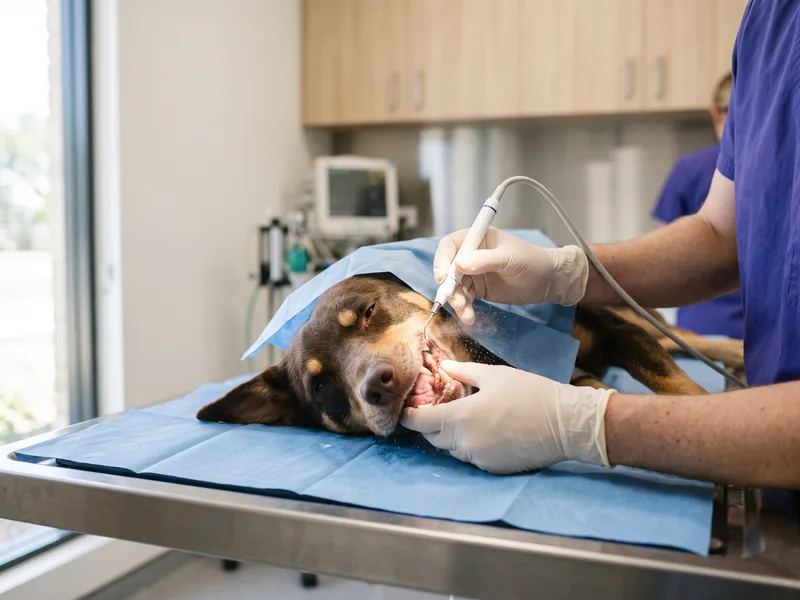
Extractions when a tooth is past saving
Nerve blocks before, sutured sockets after, and pain relief for five days. Animals eat that evening far more often than owners expect.
Keeping it away
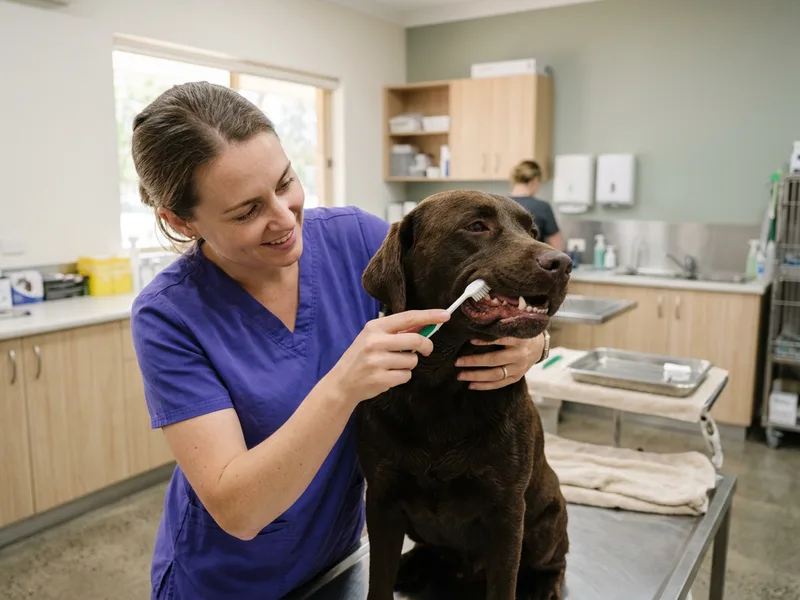
Daily brushing is the one thing with strong evidence behind it. Dental diets and chews help, and water additives do very little.
Only on this page
The grading chart our vets use
Written at Canning Vale and used across all six hospitals, so a grade two recorded in Joondalup means the same thing in Rockingham next year.
| Grade | What it looks like | What it takes to fix | What happens if it waits |
|---|---|---|---|
| 0 | Clean crown, pink gum, no odour | Brushing at home | Stays at zero with daily brushing |
| 1 | Mild tartar at the gum line, no redness | Brushing and a dental diet | Reaches grade 2 in about a year |
| 2 | Tartar with a red gum margin, some odour | Scale and polish, extractions unlikely | Bone loss starts, and bone loss is permanent |
| 3 | Heavy tartar, receding gum, loose attachment | Scale plus radiographs plus likely extractions | Roots abscess, and the animal eats on one side |
| 4 | Exposed roots, mobile teeth, strong odour | Multiple extractions under a longer anaesthetic | Chronic pain the animal shows in almost no way you would notice |
The grade recorded at the last visit is on your reminder email, so you can see whether it moved.
Where you can get this
6 of our six hospitals, because the equipment and the people it needs live in those buildings.
What it costs
From $620scale and polish
Extractions are quoted from the radiographs on the day, and we call you before doing them.
All consult feesQuestions we get asked
Why does it need an anaesthetic?
The two thirds of the tooth that matters sits below the gum, and an awake animal will hold still for neither a probe nor a radiograph. An anaesthetic-free clean tidies the visible crown and leaves the disease behind it.
How risky is the anaesthetic for an older cat?
Bloods first, fluids throughout, a warmed table and a nurse whose only job is the monitor. For most older cats, leaving an abscessed tooth is the larger risk.
Will my pet manage with teeth removed?
Cats with a full-mouth extraction eat dry food within a fortnight. Removing a painful tooth is the change owners notice most, usually inside a week.
How much will it be?
The scale and polish is a known figure. Extractions are quoted from the radiographs while the animal is under, and we telephone you before starting them.
Do dental chews work?
The ones carrying the veterinary dental council seal reduce tartar measurably. They sit well behind brushing and well ahead of doing nothing.
How often is a clean needed?
Some dogs go five years between cleans and some small breeds need one every eighteen months. The grade at each annual check tells you which one you have.
Book dental care
Available at Fremantle, Subiaco, Joondalup, Midland, Canning Vale, Rockingham.