Soft-tissue surgery, from lump removals to obstructions
Most of what a general-practice surgeon does is soft tissue: a mass that has changed, a bladder full of stones, a sock in a small intestine. Four of our six hospitals have a theatre, and the same four surgeons rotate through them.
4hospitals with a dedicated surgical theatre
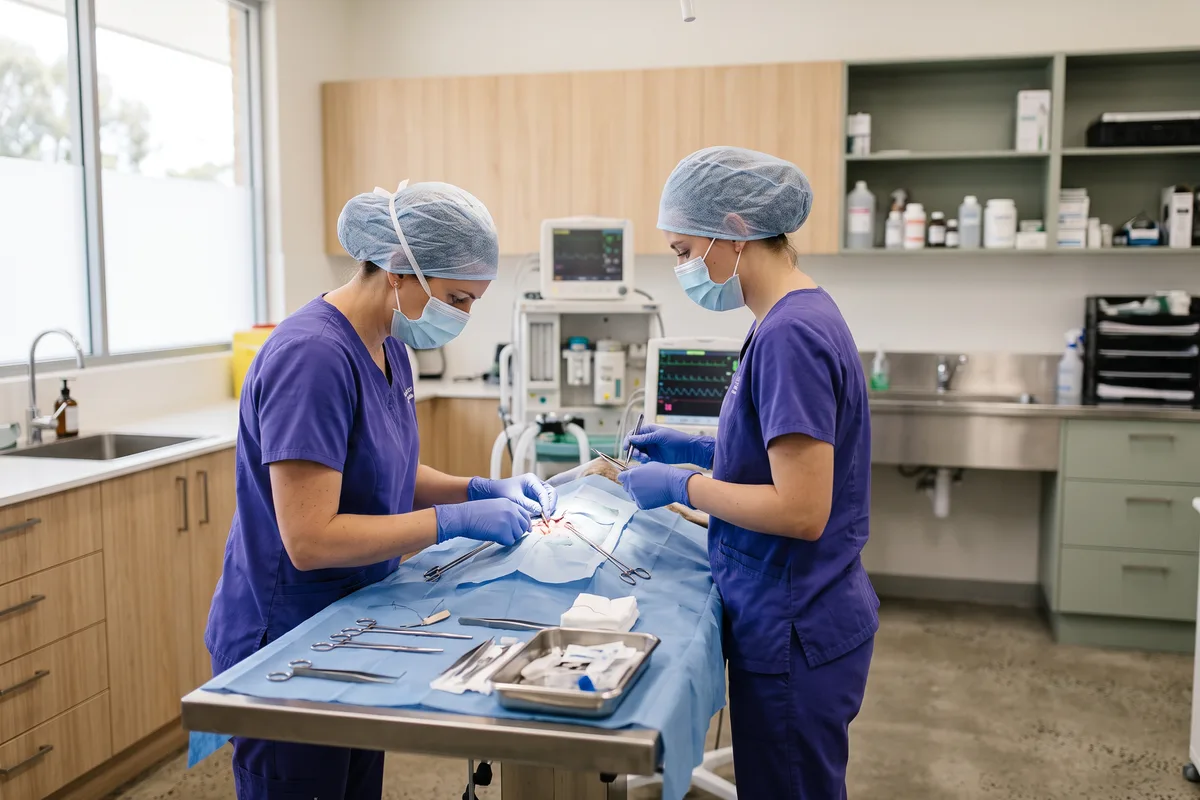
What happens
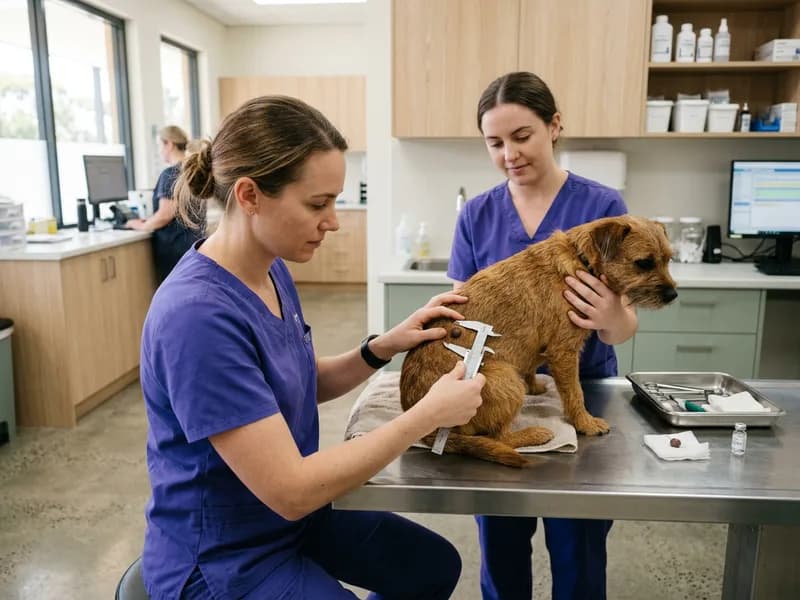
Lump and mass removals
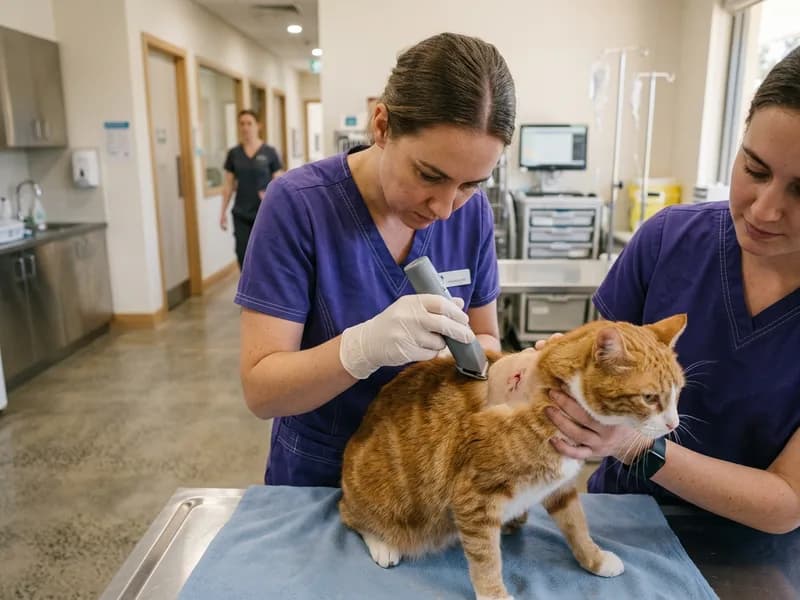
Measured, photographed and, where it changes the plan, sampled with a needle first. Knowing what a mass is decides how wide the margin has to be, and a wide margin on a benign lump is a bigger wound than anyone needs.
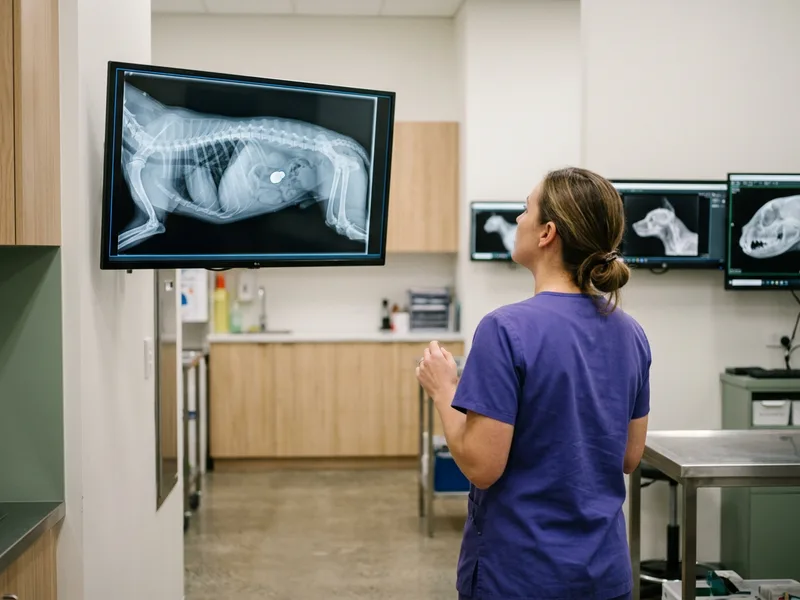
Foreign body removal
Socks, corn cobs, fishing hooks and string. Imaging first, then either an endoscope or a laparotomy depending on what it is and where it has reached.
Bladder and urinary surgery
Stones are the common one, and the stone type decides whether the diet after surgery prevents the next set. Every stone we remove goes for analysis.
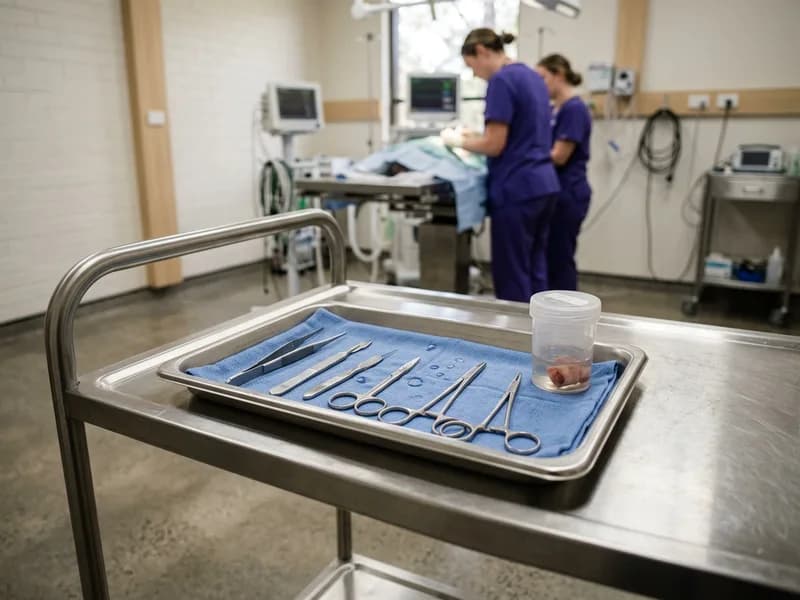
Wounds, abscesses and bite injuries
Cat fight abscesses and dog bite wounds are deeper than they look. They are flushed, explored and usually drained rather than closed on the day.
Anaesthesia and monitoring
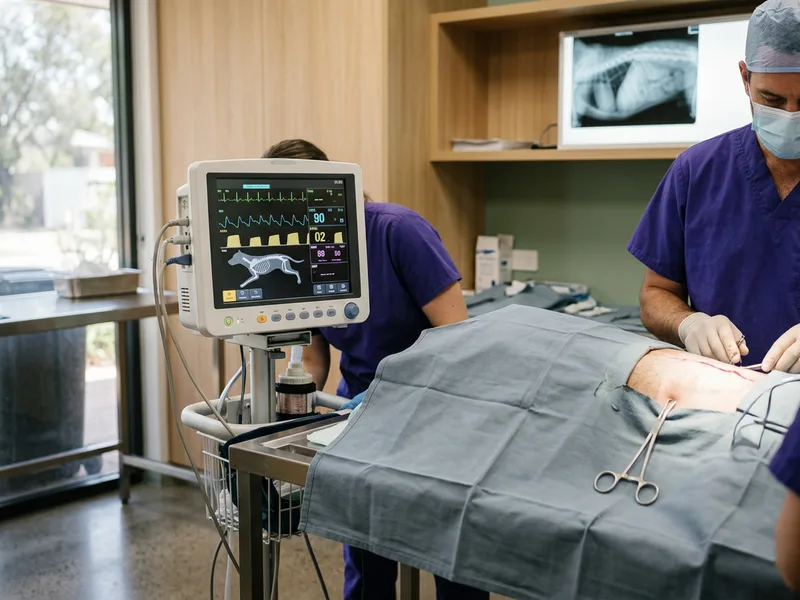
A nurse whose only job is the anaesthetic, a warmed table, and blood pressure, capnography and temperature logged every five minutes.
Only on this page
What the histopathology result changes
Every mass we remove goes to the laboratory. This is what each class of result changes about the plan afterwards, which is why the wait for it is worth sitting through.
| Result | What it means | What happens next |
|---|---|---|
| Benign, complete margins | Removed entirely, no spread risk | Nothing. The wound check at ten days closes it |
| Benign, narrow margins | Removed, but close to the edge | Watch the site at the next annual check |
| Low grade, complete margins | Malignant but slow, taken out whole | Three-monthly checks for a year |
| Low grade, incomplete margins | Cells left at the edge | A second surgery to widen, usually within a month |
| High grade | Aggressive, spreads early | Staging with imaging, then a referral conversation |
| Inconclusive | The sample cannot be graded | A second opinion from the laboratory at no charge |
Results take five to seven working days. We telephone every result, including the good ones.
Where you can get this
4 of our six hospitals, because the equipment and the people it needs live in those buildings.
What it costs
From $780single mass removal
Includes the anaesthetic, histopathology and both wound checks.
All consult feesQuestions we get asked
Can you tell me what it is before you remove it?
Often. A needle sample read in-house names about two thirds of skin masses on the day, and that is what sets the margin.
How long is the recovery?
Ten to fourteen days of lead walks and a cone for most skin surgery. Abdominal surgery is the same length with a firmer restriction on jumping.
Which hospital will my pet go to?
The nearest of the four with a theatre, unless the case needs the CT scanner, which puts it at Fremantle or Joondalup.
Will you call before doing anything extra?
Yes, and we ask for a second contact number when you book for exactly that reason.
Is an overnight stay needed?
Skin surgery goes home the same afternoon. Abdominal surgery usually stays one night, and Fremantle is the hospital that can hold it.
Book soft-tissue surgery
Available at Fremantle, Joondalup, Midland, Canning Vale.