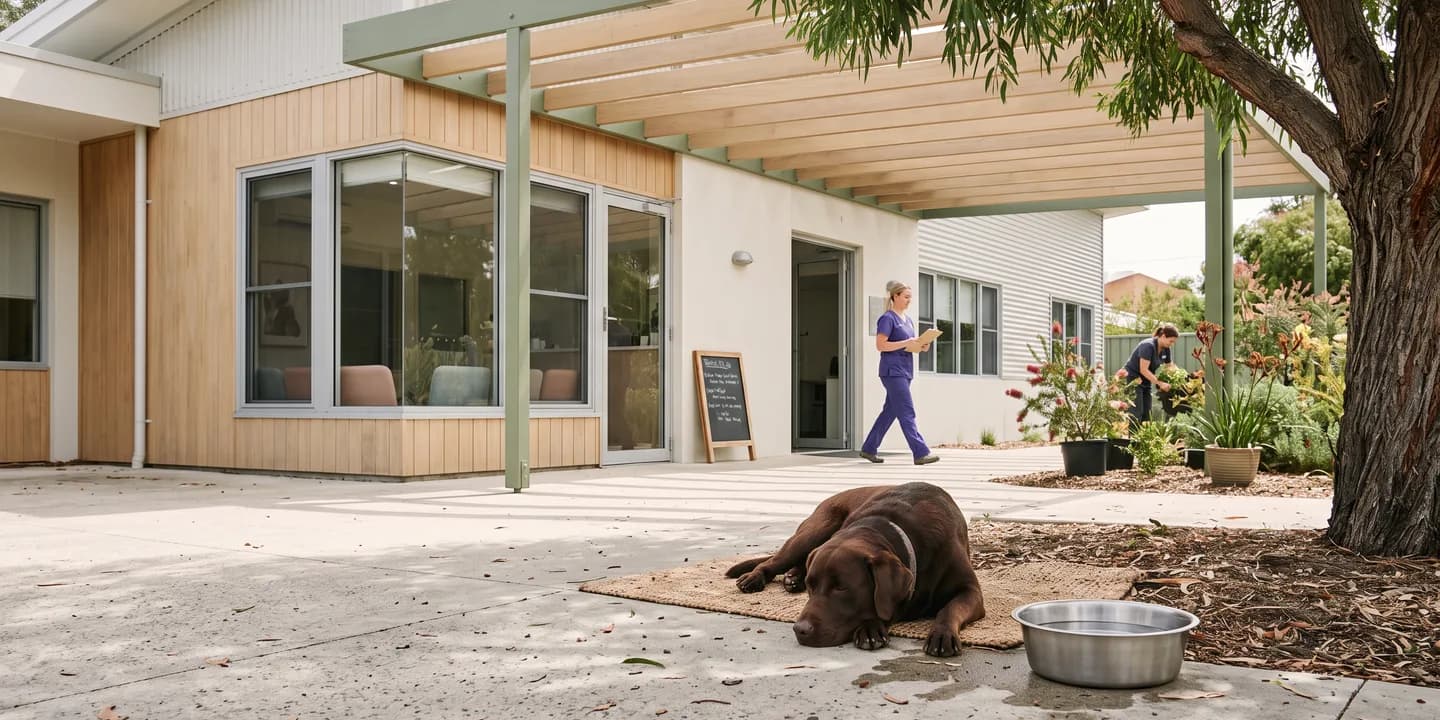
A dog cools itself by panting and by losing heat through its paws. Both stop working once the air is hotter than the dog, which in Perth happens by mid-morning through January and February. From that point a dog is storing heat rather than shedding it, and the store has a ceiling.
The dogs that get into trouble first
Flat-faced breeds are the group we see most. A pug or a french bulldog moves far less air with each pant than a kelpie does, and it starts a hot day already close to its limit. Thick-coated breeds, overweight dogs, older dogs and any dog with an existing heart or airway problem follow closely behind.
The other group is the young, fit, enthusiastic dog whose owner takes it running. A dog will keep chasing a ball well past the point where it should have stopped, because the drive to chase overrides the signal to rest.
The footpath test
Press the back of your hand to the footpath and hold it there for seven seconds. If you want to lift it off, the surface will burn a paw pad. On a thirty-five degree day, asphalt reaches around sixty-five degrees, and pad burns are painful, slow to heal and entirely avoidable by walking at six in the morning instead.
What early heat stress looks like
- Heavy panting that carries on after the dog has stopped moving
- Thick, ropey saliva, and a tongue that is wider and redder than usual
- Wobbling, or a dog that sits down and will not get up
- Bright red gums early, then pale or muddy gums later
- Vomiting or diarrhoea, sometimes with blood in it
What to do, in order
Get the dog out of the sun and into moving air. Pour cool water, not iced water, over the whole body, particularly the belly, the armpits and the groin, and keep pouring. Put a fan on the wet dog if there is one. Offer small amounts of water to drink and let the dog take it at its own pace.
Iced water and ice packs constrict the surface blood vessels, which traps heat rather than moving it. Cool water and airflow move heat, and the difference matters.
What happens at the hospital
Active cooling with fluids, temperature monitored continuously, and blood work to look at clotting, kidney function and the gut. Most dogs stay for at least a night, because the complications that matter appear between six and twenty-four hours after the event rather than at the start.
Preventing the next one
Walk before seven in the morning or after seven at night from December to March. Leave the ball at home on days over thirty. Keep water in more than one place in the yard, in shade that will still be shade at three in the afternoon. A dog left in a car on a warm day reaches a fatal temperature within minutes, with the windows down and in the shade.